


Surge Protection

logo_e

Professional Surge Protection Across the UK

Protecting Electrical Equipment and Systems Against Transient Overvoltages

Electrical Testing UK supplies and installs surge protection devices (SPDs) for homeowners, businesses and industrial operators. Transient overvoltages, caused by lightning strikes, switching operations on the supply network and internal switching of inductive loads, can damage or destroy sensitive electrical and electronic equipment instantly, or cause cumulative degradation that shortens equipment life and leads to premature failure. The 18th Edition of BS 7671 introduced a requirement to assess the need for SPD protection in all new and rewired installations, and surge protection is now a standard element of correctly designed electrical installations. We assess the risk to your installation, specify the correct type and rating of SPD at each point in the distribution system, and carry out the installation and certification.

Surge Protection

Key Features Include

Legionella Testing

Risk Assessment and SPD Specification

We assess the transient overvoltage risk to your installation in accordance with BS 7671 and BS EN 62305, and specify the correct type, rating and location of SPDs for your distribution system.

All SPD Types and Locations

We install Type 1, Type 2 and Type 3 SPDs at the correct points in the distribution system, from the main incoming board through to sub-distribution boards and sensitive equipment circuits.

Domestic and Commercial Installation

We install surge protection in domestic consumer units and commercial and industrial distribution boards, with all installations carried out to BS 7671 and certified on completion.

New Installations and Retrofits

We install SPDs in new electrical installations and retrofit surge protection to existing consumer units and distribution boards where protection is absent or inadequate.

Combined with Lightning Protection

Where a site also requires a lightning protection system, we coordinate SPD specification with the lightning protection design to ensure the two systems are correctly integrated and provide complementary protection.
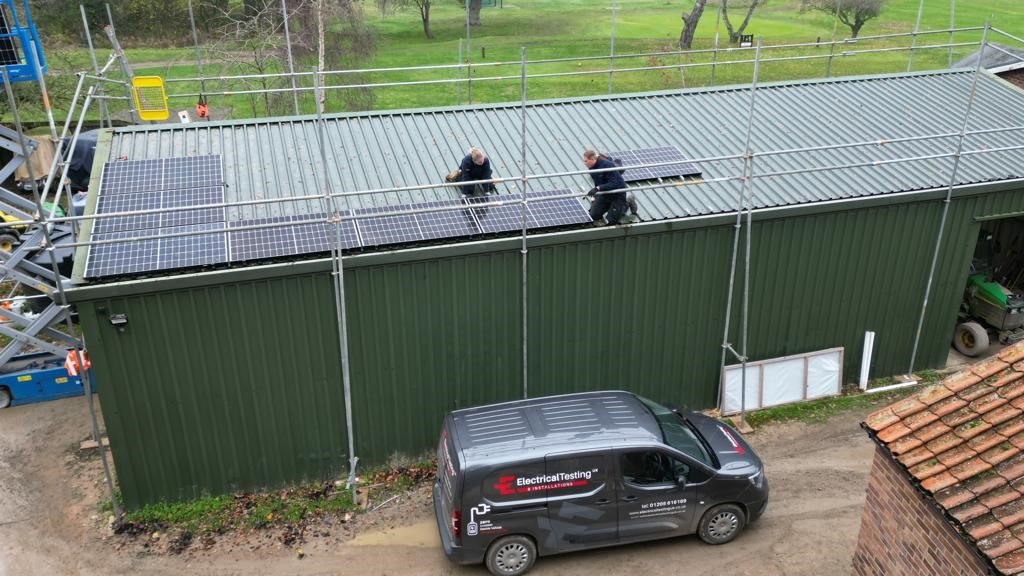

Surge Protection Device Installation for Every Property Type and Risk Level

Surge Protection for Domestic Properties and Consumer Units The 18th Edition amendment to BS 7671 requires installers to assess the need for SPD protection in all domestic installations. Where the loss of equipment or safety risk from a transient overvoltage is significant, which applies to most modern homes with electronic controls, smart systems, heat pumps and EV chargers, SPD protection is required. We install Type 2 SPDs in domestic consumer units for homeowners and landlords, providing protection for the entire installation from a single device at the incoming board.

Surge Protection for Commercial Premises Commercial premises with IT infrastructure, CCTV systems, access control, fire alarm panels and building management systems are particularly vulnerable to transient overvoltages. Damage to any of these systems causes disruption and replacement costs that far exceed the cost of SPD installation. We install coordinated SPD protection for commercial premises, with Type 2 devices at the main distribution board and Type 3 devices at sensitive equipment circuits where additional protection is required.

Surge Protection for Industrial Sites and Process Equipment Industrial sites with variable speed drives, motor controls, CNC equipment and process control systems are exposed to internally generated transients from switching operations as well as externally sourced overvoltages. We install SPD protection for industrial distribution systems, specifying devices rated for the fault levels and installation conditions of the site and coordinating protection across multiple distribution levels where required.

Surge Protection for Buildings with Lightning Protection Systems Buildings fitted with a lightning protection system require coordinated SPD protection to prevent the energy of a lightning strike conducted to earth via the protection system from entering the electrical installation through equipotential bonding connections. We assess the SPD requirements of buildings with lightning protection systems and install Type 1 SPDs at the incoming board, coordinated with Type 2 and Type 3 devices downstream, to provide complete protection against both direct and indirect lightning effects.

From Assessment to Certification, the Surge Protection Installation Process

Assessing overvoltage risk and specifying protection We assess the transient overvoltage risk to the installation using the risk assessment methodology of BS EN 62305-2, taking into account the local lightning flash density, the type of supply system, the proximity of overhead lines and the sensitivity and value of the equipment to be protected. Based on the risk assessment we specify the type, rating and location of SPDs required to reduce the risk of equipment damage to an acceptable level, and provide a written specification before any installation work is committed.

Installing SPDs at the correct points in the distribution system SPDs are installed at the main incoming board and at sub-distribution boards and final circuit level where the risk assessment indicates additional protection is required. All SPDs are installed in accordance with the manufacturer’s requirements and BS 7671, with correct sizing of the connecting conductors and verification that the earth fault loop impedance at each installation point is within the limits required for the SPD to operate correctly.

Certification and documentation on completion All SPD installations are certified on completion with a Minor Electrical Installation Works Certificate or Electrical Installation Certificate as appropriate. The certification records the type, rating and location of every SPD installed and confirms that the installation meets the requirements of BS 7671. Where the SPD installation forms part of a coordinated lightning and surge protection scheme, we provide documentation covering the complete protection system.

Why Homeowners and Businesses Choose Electrical Testing UK for Surge Protection

Risk assessment before specification We assess the actual overvoltage risk to your installation before specifying any equipment. We do not fit the same SPD to every consumer unit, we specify protection based on the risk level, the sensitivity of the equipment to be protected and the distribution system architecture.

Knowledge of BS 7671 SPD requirements The 18th Edition requirements for SPD installation are specific about device type, rating, connecting conductor sizing and earth fault loop impedance. Our engineers understand these requirements and apply them correctly, ensuring that installed SPDs will perform as intended.

Domestic and industrial capability From a single Type 2 SPD in a domestic consumer unit to a coordinated multi-level protection scheme for an industrial site, we specify and install surge protection correctly across all installation types and sizes.

Combined lightning and surge protection available As a provider of both lightning protection systems and SPD installation, we design and install coordinated protection schemes that address both direct and indirect lightning effects under one contract.

Qualified engineers, not subcontractors All surge protection installation is carried out by our own NICEIC-qualified engineers. We do not subcontract, so quality and accountability remain with Electrical Testing UK throughout.

Our Work

Surge Protection

Electrical Testing UK assesses overvoltage risk and installs surge protection devices for domestic properties, commercial premises and industrial sites across the UK, protecting electrical equipment and systems against transient overvoltages with correctly specified and fully certified SPD installations.

Project name

Lorem ipsum dolor sit amet, consectetur adipiscing elit. Praesent.

Project name

Lorem ipsum dolor sit amet, consectetur adipiscing elit. Praesent.

National Coverage

We are a local Lincolnshire business, but with satellite offices in Peterborough, Cambridge, Nottingham and Enfield, no matter where you’re based in the UK, we can help. Just give us a call or drop us an email.